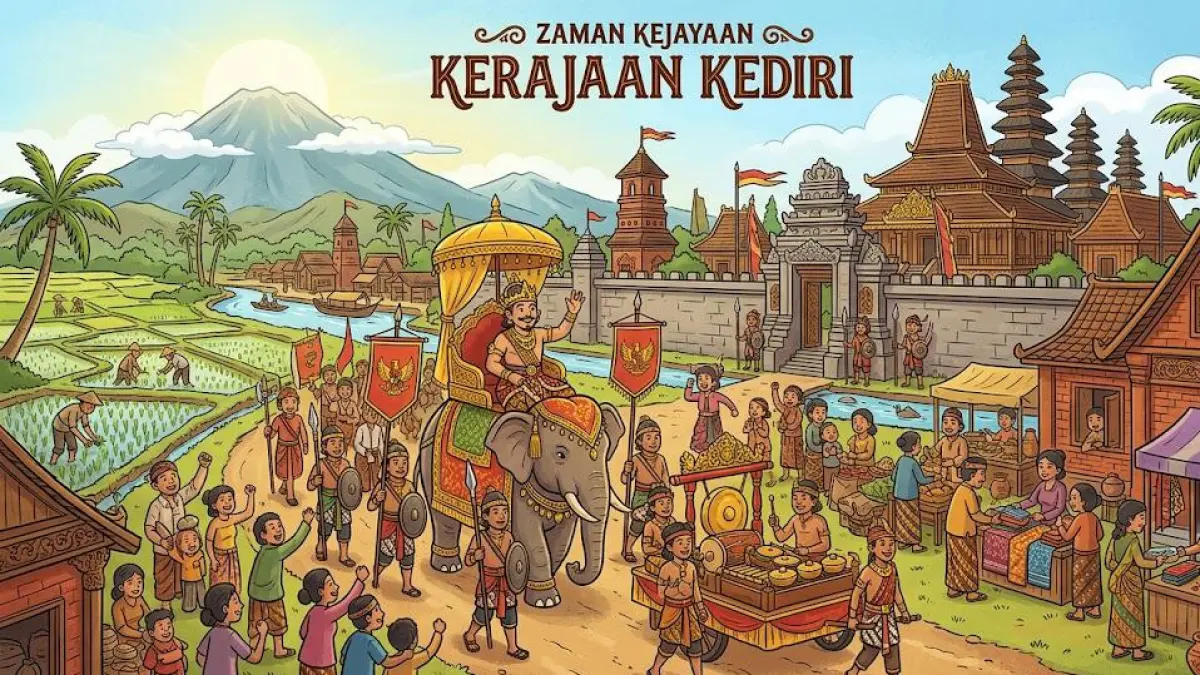
JAKARTA - The fall of the Kediri Kingdom in 1222 marked a dramatic turning point in Javanese history, as King Kertajaya’s controversial policies and claims of divinity triggered a rebellion that ended one of Java’s most powerful kingdoms. His rule, once marked by authority and grandeur, ultimately collapsed under internal resistance and religious conflict.
The fall of the Kediri Kingdom is closely tied to Kertajaya’s decision to demand worship from religious leaders and the public, a move that destabilized both political and spiritual order. What began as a powerful reign soon unraveled into conflict, culminating in a decisive battle that reshaped power in Java.
Historians widely regard the fall of the Kediri Kingdom as a lesson in how political overreach and religious tension can erode even the strongest states.
Kertajaya’s Rule and the Seeds of Conflict
Kertajaya, also known as Prabu Dandhang Gendhis, ruled Kediri during its late peak between the late 12th and early 13th centuries. He inherited a powerful kingdom that had flourished under earlier rulers such as Jayabaya, known for prophecy and cultural achievements.
Historical inscriptions—including Sapu Angin (1190), Kamulan (1194), and Palah (1197)—confirm Kertajaya’s reign and document his policies. Kediri itself, a successor to the Kahuripan kingdom founded by Airlangga in 1041, controlled large parts of Java and maintained trade links beyond the island.
However, Kertajaya’s rule took a controversial turn when he declared himself a manifestation of the god Shiva. According to texts such as Pararaton, he demanded that Brahmins and Buddhist leaders worship him—an unprecedented move in the established religious hierarchy.
Baca Juga: Moto3 Indonesia 2026 Jadi Sorotan Dunia, Veda Ega Pratama Bawa Harapan Baru di Grand Prix
“I am the incarnation of Shiva, and only Shiva can defeat me,” Kertajaya is described as claiming in traditional accounts, reflecting the extent of his assertion of divine authority.
Religious Tensions and Political Instability
Kertajaya’s demand directly challenged the authority of Brahmins, who traditionally occupied the highest spiritual status in Hindu society. Their refusal to comply sparked severe reprisals. Historical narratives describe torture, executions, and widespread fear among religious communities.
This repression weakened Kertajaya’s legitimacy. By the early 13th century, social unrest had intensified, and public sentiment began shifting toward the persecuted religious leaders.
In protest, Brahmins staged a mass exodus from Kediri’s capital, relocating to Tumapel—a subordinate region under Kediri’s control but led by a rising figure, Ken Arok. Their migration was not only an escape but also a strategic political move, spreading accounts of Kertajaya’s actions and rallying opposition.
Ken Arok, known for his respect toward Brahmins, welcomed them and gained their full support. In a significant symbolic gesture, the Brahmins granted him the title “Batara Guru,” identifying him as the legitimate representative of divine authority—directly countering Kertajaya’s claims.
The Ganter Battle and the Fall of Kediri Kingdom
Armed with religious legitimacy and growing popular support, Ken Arok mobilized forces to challenge Kediri. Meanwhile, Kertajaya prepared his army to suppress the uprising, setting the stage for an inevitable confrontation.
The निर्णsing moment came in 1222 during the Battle of Ganter. Ken Arok’s forces, described as highly organized and motivated, defeated Kediri’s army. Two of Kediri’s top commanders, Mahesa Wulungan and Gubar Baleman, were killed in the conflict.
The defeat marked the fall of the Kediri Kingdom as a dominant power. Historical sources differ on Kertajaya’s fate—some state he died in battle, while others suggest he escaped and disappeared. However, texts like Pararaton indicate that his death effectively ended the ruling dynasty.
The victory allowed Ken Arok to establish the Singhasari Kingdom, ushering in a new political era in Java.
Legacy and Historical Impact
The fall of the Kediri Kingdom had far-reaching consequences for the region’s political and cultural trajectory. It demonstrated how fragile royal authority could become when it clashed with entrenched religious structures.
Baca Juga: Honda Team Asia Jadi Harapan Baru Pembalap Asia, Siap Cetak Bintang MotoGP Masa Depan
The shift of power from Kediri to Tumapel under Ken Arok also laid the groundwork for future empires, including Majapahit, which would later dominate the archipelago.
Historians note that Kediri’s collapse was not merely the result of military defeat but a culmination of internal dissent, religious conflict, and loss of public trust.
Ultimately, the story of Kertajaya serves as a cautionary tale. His reign illustrates that power without balance—especially between political authority and spiritual legitimacy—can lead even the mightiest kingdoms to ruin.
Editor : Axsha Zazhika